TIPS as an Inflation Predictor
September 6, 2026 by USTYC
What are TIPS?
Treasury Inflation-Protected Securities (TIPS) are a type of US debt instrument that includes an adjustment for inflation. When a TIPS reaches maturity, the holder is repaid the greater of the original principal, or an inflation-adjusted principal amount. The adjustment is based on the changes in Consumer Price Index (CPI) over the life of the bond, ensuring protection from inflation. TIPS are currently issued in 5, 10, and 30 year durations.
TIPS pay a coupon at a fixed rate, but the principal on which the rate is based will adjust over time. For example, a $1,000 TIPS yielding 1% will initially yield a $10 annual coupon. If the principal is adjusted upward 3% to account for the change in the CPI, then the principal is revalued at $1,030. The next annual coupon will be: $1,030 * 0.01 = $10.30.
This example is simplified for explanation. Actual TIPS pay semi-annual coupons, and their principal value is adjusted daily by the Treasury Department using a formula that smooths out the change over the last two reported months of CPI. You can calculate the principal adjustment using the Index Ratio published by the Treasury daily for each outstanding TIPS issue. There is a 3-month delay in adjustments because the BLS reports CPI for the previous month, and then the TIPS adjustment factors in the last two months of data.
Nominal, “risk free” and “real” interest rates
The nominal yields offered by US Treasuries are also commonly referred to as the “risk free” rate, the baseline rate of return at which an investor can avoid a risk of default (failure to pay the coupon or principal repayment). i.e. an investor is guaranteed the promised return. Unlike a corporation or municipality, it is unfathomable that United States government would end up in a situation where it can’t pay the coupons or principal on Treasuries because the US dollar is a fiat currency. The Federal government can always issue more debt or expand the money supply to raise the dollars necessary to meet current payment obligations. However, such activity may contribute to inflation.
The relationship between nominal rates and inflation
The yield on Treasury bonds, notes, and T-bills are nominal rates, meaning they do not have a built-in adjustment for inflation. An investor in a Treasury bond still faces a risk that their purchasing power will have been eroded by inflation by the time the bond’s principal is repaid. Most of the time, however, Treasuries still provide a return that exceeds the inflation rate.
On the secondary market Treasuries may trade above or below par value, which can influenced by the bond market’s expectation for inflation. If inflation expectations are high, bonds typically trade at lower values, which increases the nominal yield. The increase in the nominal yield is a premium to compensate for future inflation risk.
For example, if inflation is expected to average 3% over the life of a Treasury note and the note trades at 5%, then 3% of the nominal yield could be considered a premium to compensate for inflation risk, referred to as the “breakeven rate”. The remaining 2% (5% nominal yield - 3% inflation premium) is called the real interest rate, which reflects the actual return an investor would receive after considering the erosion of purchasing power caused by inflation. Because TIPS have a built-in mechanism to adjust for inflation, this practically removes the inflation risk premium part of their yield, making the TIPS yield considered to be the “real” interest rate.
The Fisher equation, and the breakeven rate
Fixed income investors are significantly impacted by inflation, which they must take into consideration when evaluating a fair purchase price for a bond. Therefore the bond market has an incentive to factor in future expectations of inflation, which gets reflected in pricing. The Fisher equation can be used to quantify this relationship in the context of a nominal interest rate, a comparable real interest rate, and inflation expectations:
Fisher Equation:
i = r + E(π)

i = the nominal interest rate
r = the real (inflation adjusted) interest rate
E(π) = the market's projection of inflation over the duration of the bond
The Federal Reserve Bank of St. Louis refers to the market’s implied expectation of inflation as the “breakeven inflation rate”. FRED has datasets for all three values. Let’s look at these charts of the 5-year horizon.
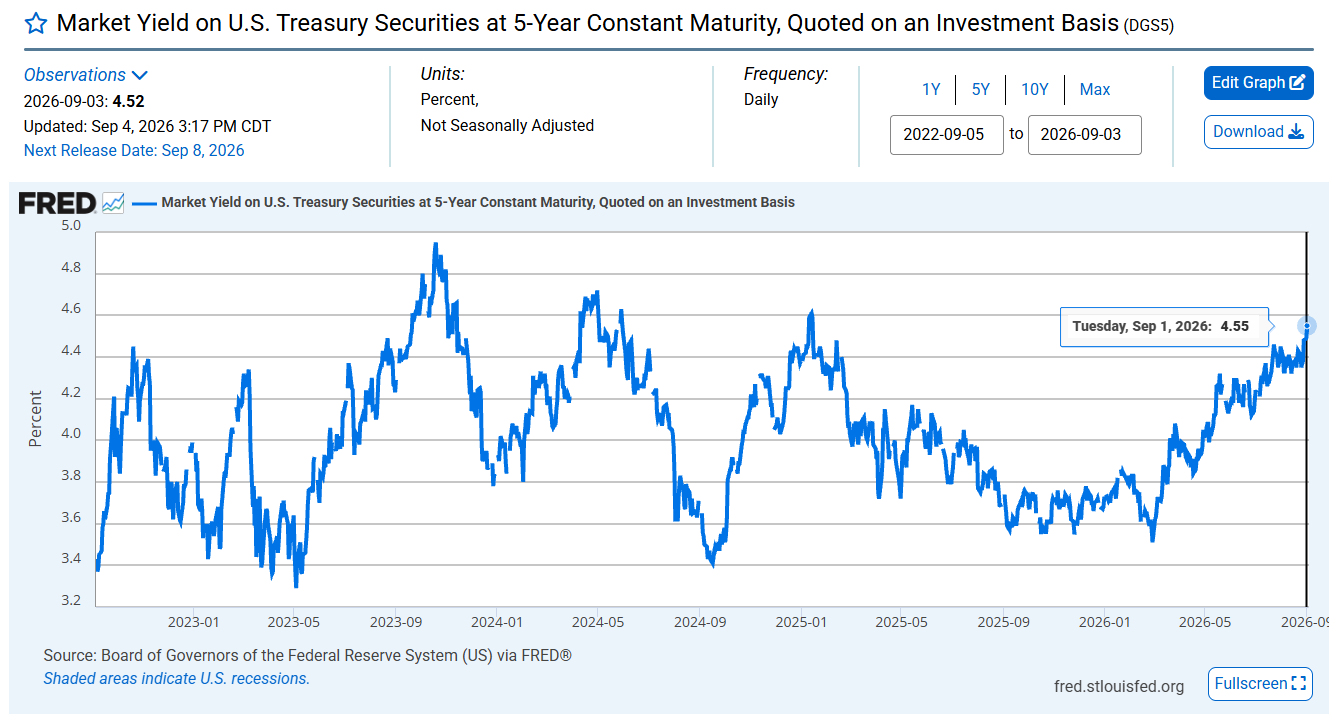
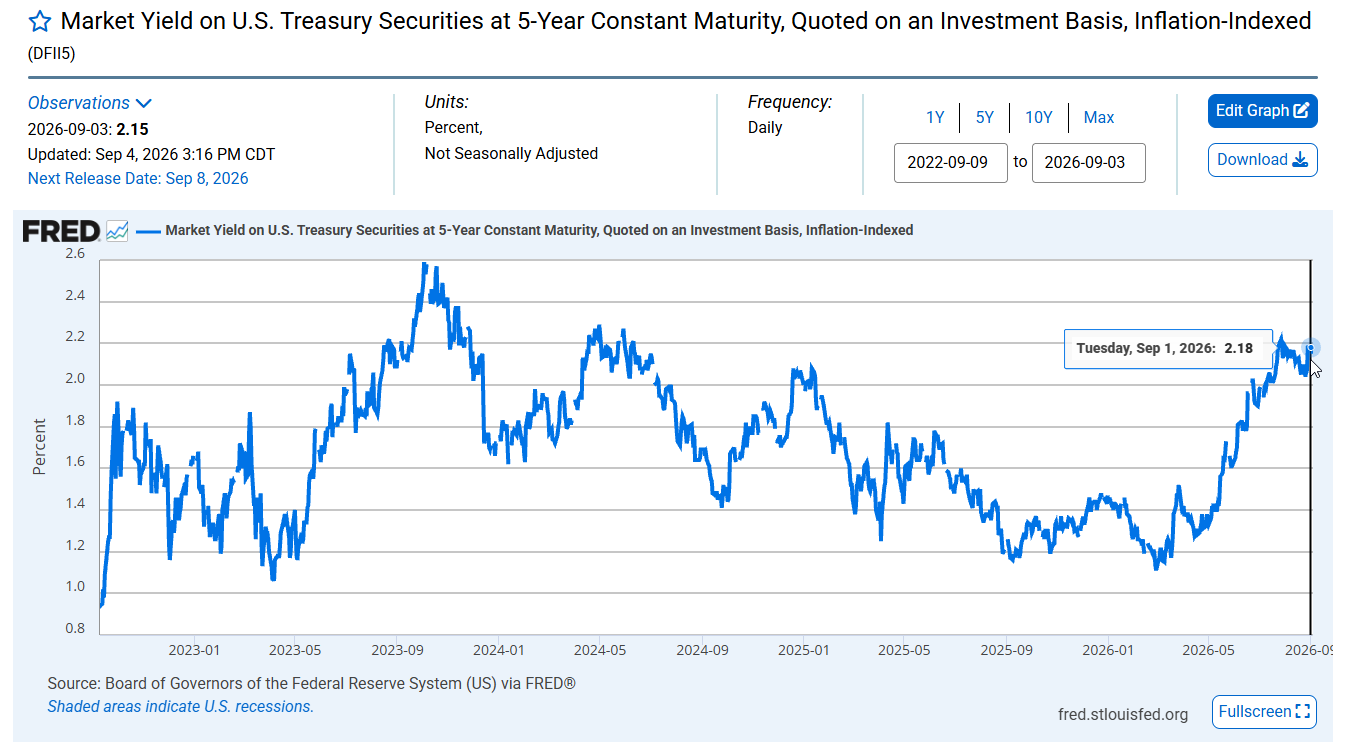
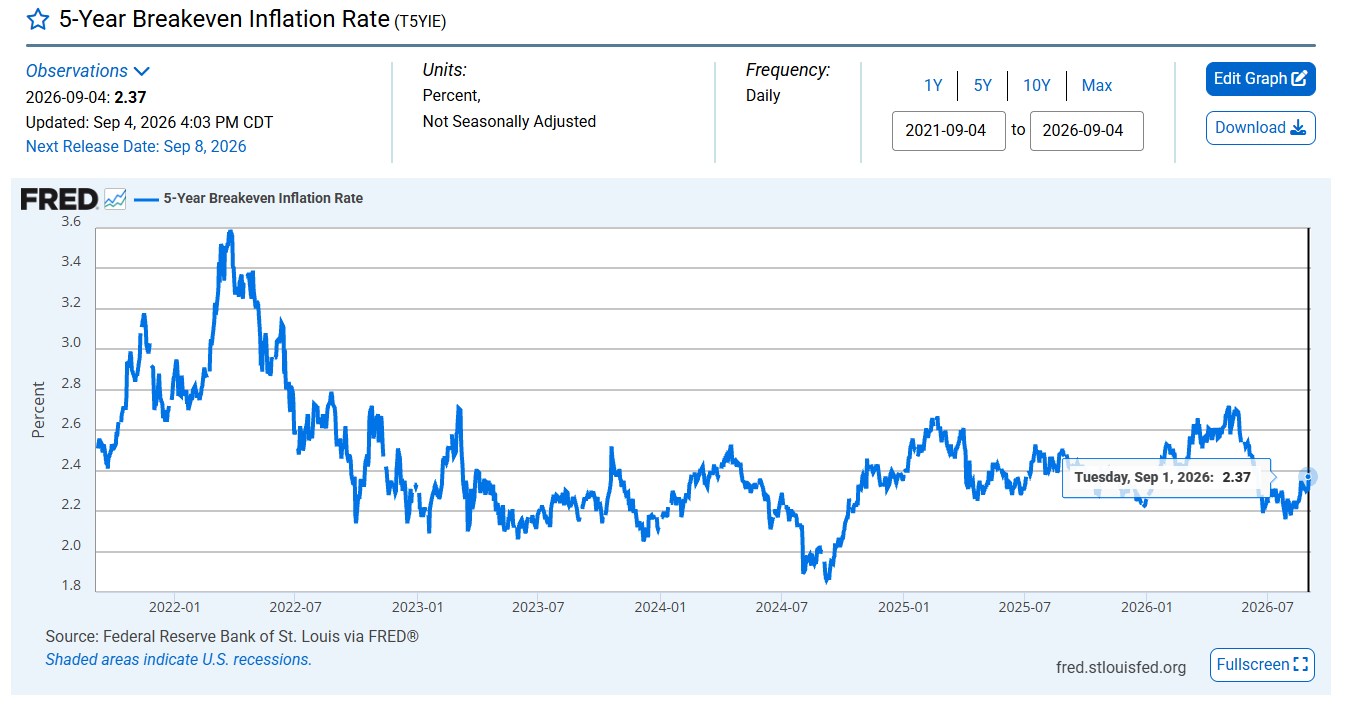
Although the breakeven rate can provide a reasonable proxy for the market’s anticipated inflation rate, the value also bakes in some some liquidity premium because TIPS are less liquid than nominal Treasuries.
TIPS feature on the US Treasury Yield Curve Chart
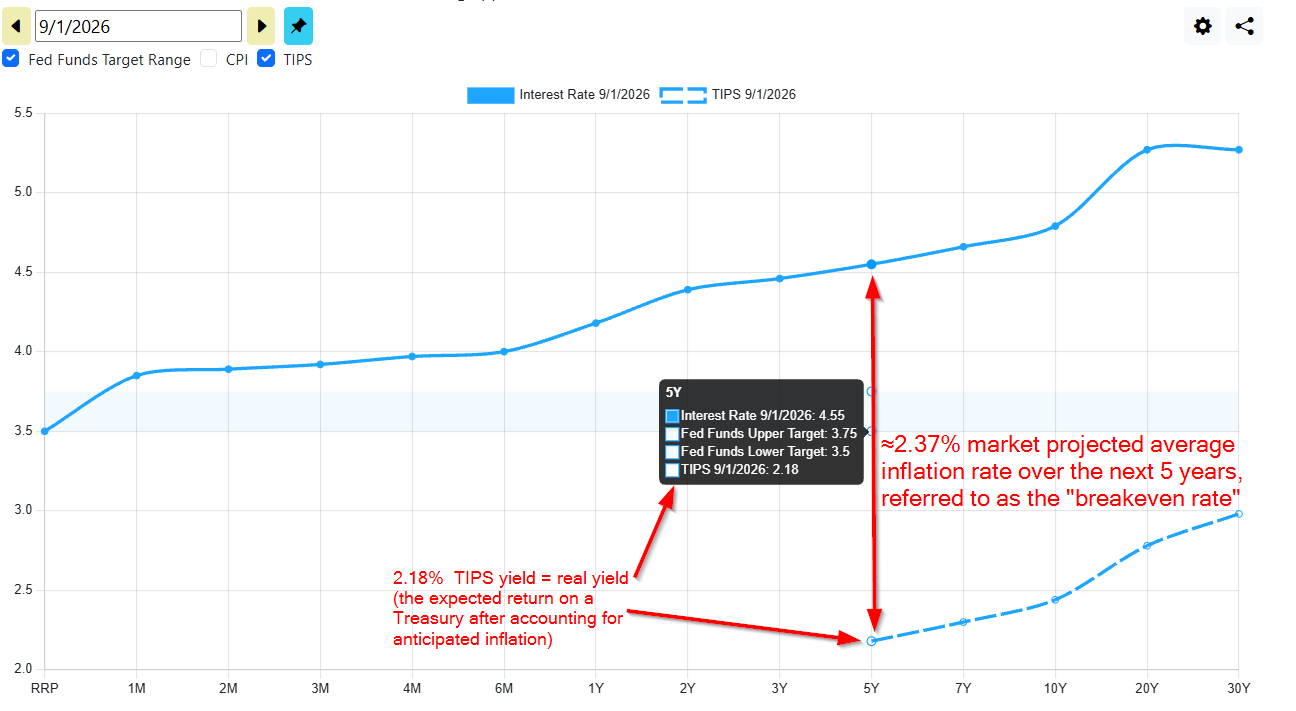
Beginning in September 2026, the US Treasury Yield Curve app has a “TIPS” toggle, which will enable you to see a TIPS yield curve and compare it against the nominal Treasuries interest rate curve. TIPS data for any given trading day typically becomes available 2 business days after.
References
Treasury Inflation-Protected Securities (TIPS) - Treasurydirect.gov
TIPS and Inflation: What to Know Now - Schwab
Inflation Expectations - Florida Atlantic University College of Business